AI in 2026: Amazing Ways AI Is Transforming Everyday Life
Artificial Intelligence (AI) has rapidly evolved from a futuristic idea into a powerful force shaping our everyday lives. In 2026, AI is no longer limited to tech experts or large corporations—it is now accessible to students, professionals, and even small businesses. Tools like ChatGPT are leading this transformation, making tasks faster, smarter, and more efficient.
AI in Our Daily Routine
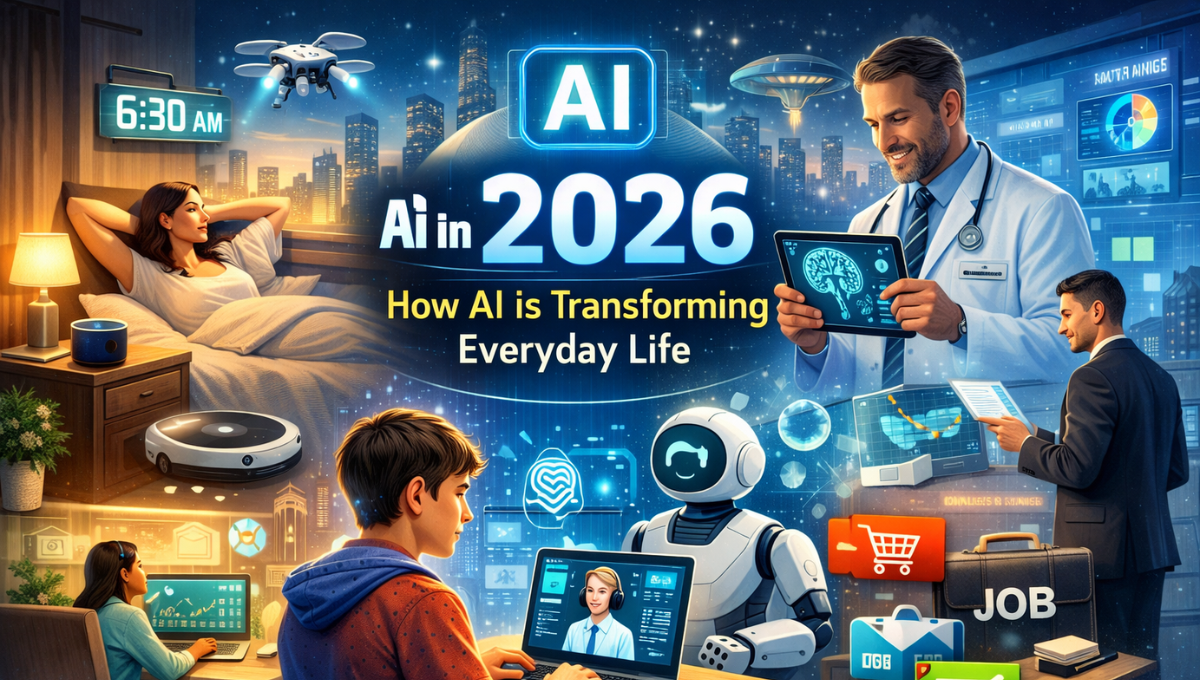
AI has become an invisible assistant in our daily lives. From waking up with smart alarms to getting personalized recommendations on streaming platforms, AI is everywhere. Applications such as Google Assistant help users manage schedules, control smart devices, and even answer complex questions instantly.
Online shopping platforms use AI to suggest products based on user behavior, while navigation apps predict traffic and suggest faster routes. These innovations save time and improve convenience.
Impact of AI on Jobs and Careers
One of the biggest discussions around AI is its impact on employment. While automation is replacing repetitive tasks, it is also creating new job opportunities in fields like Data Science, AI development, and cybersecurity.
Professionals are now expected to adapt by learning new digital skills. The future workforce will not compete with AI but collaborate with it. Those who embrace AI tools will have a significant advantage in their careers.
AI in Education
The education sector has seen a major transformation due to AI. Learning is now more personalized and interactive. AI-powered platforms can analyze a student’s strengths and weaknesses, providing customized study plans.
Students can use AI tools for research, writing, and problem-solving. This not only improves understanding but also saves time, making education more efficient and accessible worldwide.
AI in Health and Lifestyle
AI is playing a crucial role in improving healthcare and lifestyle. From fitness tracking apps to advanced medical diagnosis systems, AI is helping people monitor their health more effectively.
Mental health apps powered by AI provide support and guidance, especially for those who may not have access to traditional therapy. However, the use of personal data raises concerns about privacy and security, which must be addressed carefully.
Challenges and Ethical Concerns
Despite its benefits, AI comes with challenges. Issues such as data privacy, job displacement, and ethical use of technology are major concerns. It is important for governments and organizations to establish regulations that ensure AI is used responsibly.
Balancing innovation with ethical considerations will be key to creating a sustainable future.
The Future of AI
The future of AI is full of possibilities. As technology continues to evolve, AI will become even more integrated into our lives. From smart cities to autonomous vehicles, the impact of AI will continue to grow.
The goal is not to replace humans but to enhance human capabilities. By using AI wisely, society can achieve greater efficiency, innovation, and progress.
Benefits and Risks of AI in 2026
AI offers many benefits such as increased efficiency, better decision-making, and time-saving automation. Businesses can grow faster, and individuals can complete tasks more easily using tools like ChatGPT.
However, there are also risks involved. Job displacement, data privacy issues, and over-dependence on technology are some major concerns. It is important to use AI responsibly and maintain a balance between human intelligence and machine capabilities.
Conclusion
Artificial Intelligence is transforming the world at an unprecedented pace. In 2026, it is clear that AI is here to stay and will continue to shape the future. By understanding and adapting to this technology, individuals and businesses can unlock new opportunities and thrive in the digital age.
👉
Learn more about AI from OpenAI official website.
Also read: Future of AI tools for students